

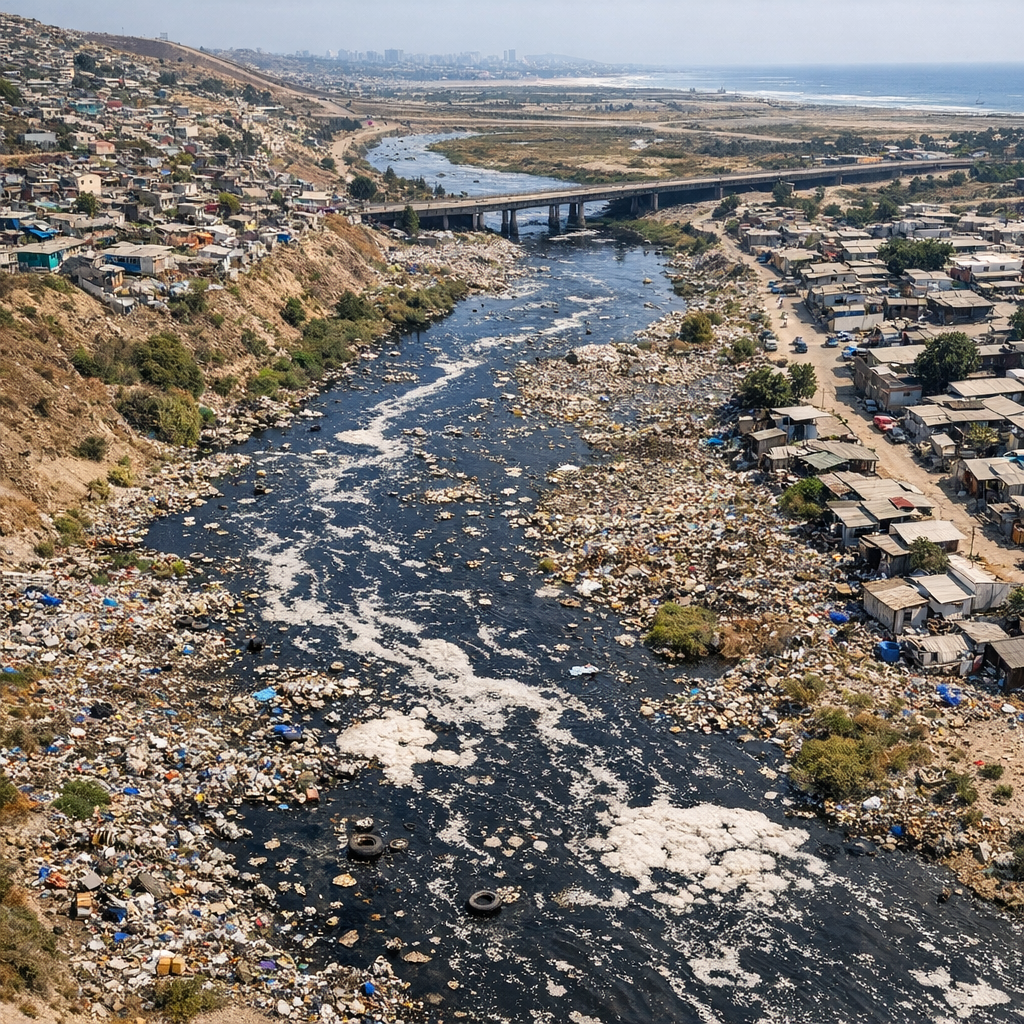
The Tijuana River, flowing from Mexico into Southern California, has long been a conduit for untreated sewage, industrial waste, and stormwater runoff. This pollution has led to significant environmental degradation and public health concerns in communities along the border.
Environmental and Health Impacts
Since 2018, over 100 billion gallons of raw sewage have entered the Tijuana River, adversely affecting coastal ecosystems and leading to frequent beach closures. Residents in affected areas report health issues such as headaches, respiratory problems, and nausea due to exposure to toxic gases emitted by the polluted waters.
Recent Initiatives and Funding
In response to this crisis, Governor Gavin Newsom announced the allocation of $46 million in voter-approved funding to address cross-border pollution in the Tijuana River and the New River. This funding aims to upgrade wastewater treatment facilities and implement projects that reduce bacteria and trash, thereby improving public health and restoring the environment.
Collaborative Efforts
Addressing the Tijuana River pollution requires coordinated efforts between the United States and Mexico. The San Diego Regional Water Quality Control Board has approved measures to increase the capacity of the South Bay International Wastewater Treatment Plant, allowing it to treat more sewage and reduce pollution levels. Additionally, the U.S. Army Corps of Engineers and Riverside County have celebrated milestones in levee rehabilitation projects, enhancing flood protection and water quality in the region.
Looking Ahead
While these initiatives mark significant progress, ongoing collaboration and sustained investment are essential to fully address the Tijuana River pollution crisis. Continued engagement from federal, state, and local agencies, along with community organizations and residents, will be crucial in developing and implementing long-term solutions that protect public health and the environment.