

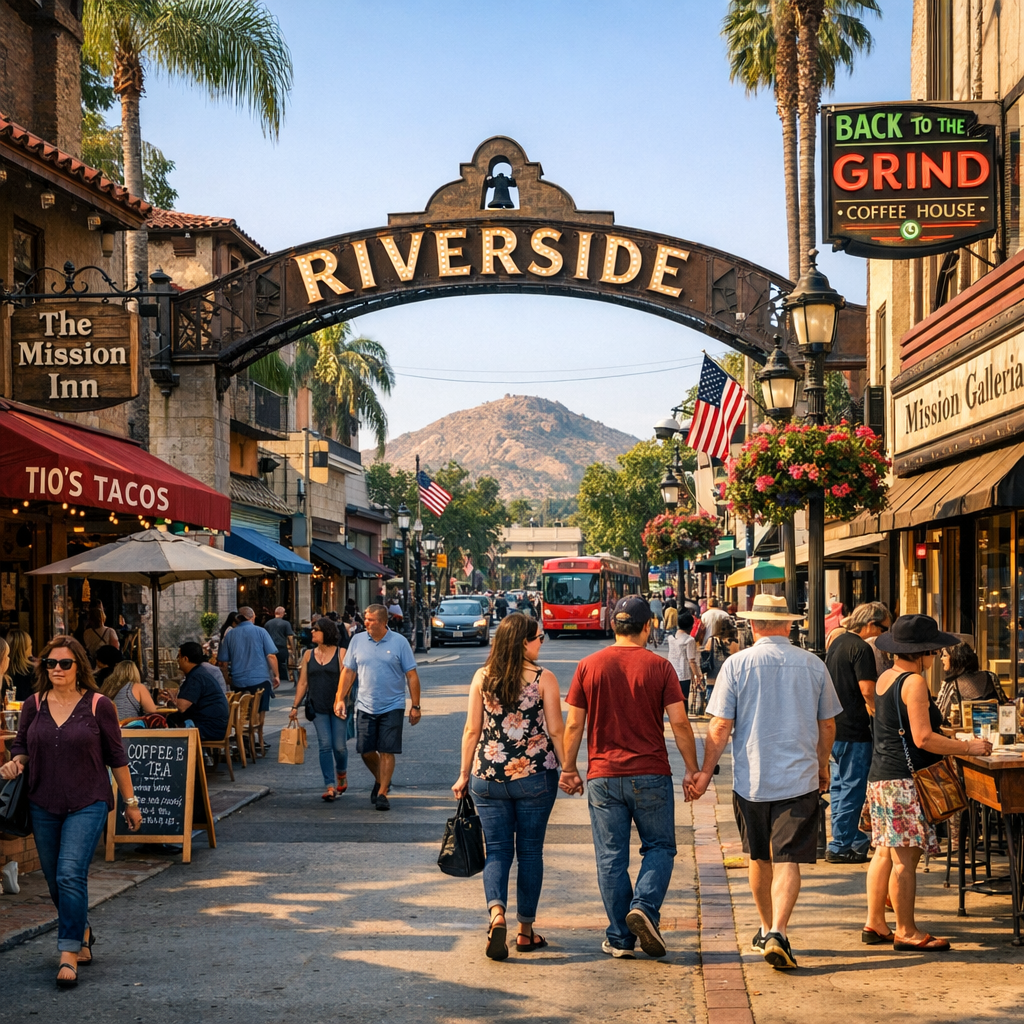
Riverside, California, has long been recognized for its dynamic economic environment, blending a rich history with modern innovation. As the 12th largest city in the state, Riverside serves as a pivotal economic hub in Southern California.
Economic Growth and Key Sectors
In recent years, Riverside has experienced notable economic growth. The city’s economy thrives due to a variety of industries, including advanced manufacturing, quality retail and services, four major medical facilities and institutions of higher education, local agriculture and related food system enterprises, and a growing base of clean- and green-tech research, development, technology, and manufacturing companies. As an important financial and professional center, Riverside offers the support of numerous legal, accounting, brokerage, architectural and engineering, air quality, sustainability and environmental stewardship firms, as well as banking institutions.
Riverside draws interest and investment from a diverse population of creative and entrepreneurial residents, employees, students, business owners, and visitors. This community’s excellence in embracing technology, workforce development, digital inclusion, arts, innovation, collaboration, and social capital continue to improve an already remarkable quality of life.
Employment Trends
Employment trends in Riverside have shown resilience. The unemployment rate edged up slightly compared to 2024, and nonfarm job growth has slowed compared to the last two years. Job creation has mainly been limited to three industries, while the others were flat or down. Inflation in the region has generally fallen over the past year, although a recent uptick might be a sign of future trends. The housing market improved over the year, with prices edging up, sales responding somewhat to lower mortgage rates, and construction ticking up. Still, the rental market is tight with low vacancies and rising rents.
Challenges and Opportunities
Despite the positive trends, Riverside faces challenges. The region added only 22,000 new jobs in 2025—which, outside of the pandemic, is the lowest job growth since the Great Recession. However, the city is actively addressing these challenges. For instance, Riverside officials have been proactive in attracting new businesses. In January 2026, city leaders highlighted Riverside as “the best bargain” in the state for prospective industrial and warehouse property owners, emphasizing ongoing efforts to attract new businesses to the city.
Furthermore, Riverside’s commitment to economic development is evident through initiatives like the Economic Development Department’s mission to create a thriving local economy by supporting businesses and encouraging job development, income growth, and investment in the city.
Conclusion
Riverside’s economic landscape is a testament to its resilience and adaptability. While challenges exist, the city’s proactive approach, combined with its diverse economic base, positions it well for sustained growth and prosperity in the years to come.